DEEPER INTO OUR ROOTS By Jack Miller
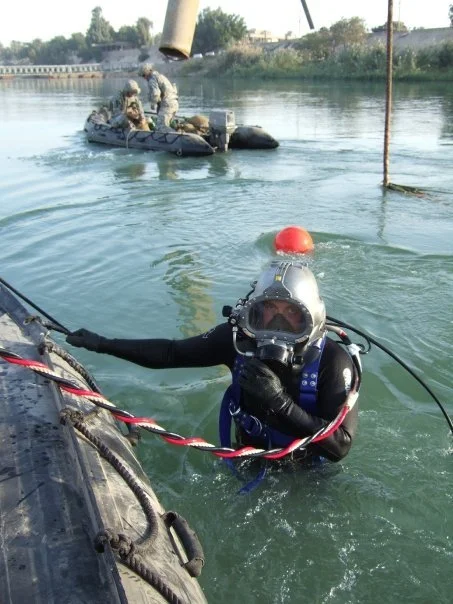
Just after the Fourth of July, I was sent to Savannah, Georgia as a dive supervisor with a dive crew to assist in the removal of a steel sheet pile coffer dam. It had imploded while a contractor was trying to excavate a large bridge foundation. We would be burning the steel inner support wales out of the muddy river bottom at about 40-feet deep.
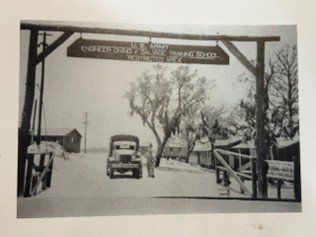
I brought along my metal detectors thinking that nearby Tybee Islands sandy beaches might be a good place to hunt. Making a trip to Barnes & Noble books to find local information or good spots found the book, “Tybee Island, The Long Branch of the South” by Robert A. Ciucevich. Scanning through the index looking for ideas, I came across Deep Sea Diving and Salvage School with three pages listed as references. I knew they were referring to the Army Diving and Salvage School that had been the first Army Dive School started back in the early 1940s at Fort Screven. Their purpose was to support Army engineers ramping up for WW II.
According to the book, Fort Screven had been the administration or command center for the dive unit. The actual training was established on the west side of the island on Chimney Creek, called Camp Hammock.
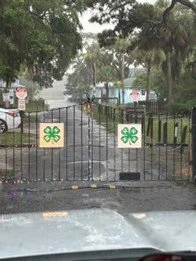
Here from 1941 to 1943 divers were trained in port construction for clearing ports of sunken ships and ordinance in Africa and Europe. All this in anticipation of the impending Allied invasion. After the war, the Army no longer needed Tybee Island military support. The whole base was sold off to a local real estate corporation. The area where the diving unit was located became a 4-H summer camp.
On a whim, I googled the 4H camp on Tybee Island and found it was still in existence, got their phone number, and gave them a call. Reaching an answering machine, I probably left a disjointed message of who I was and my interest in anything concerning the old dive school. The following day, the camp director returned my call explaining that the barracks and two or three outbuildings were still standing from the original Camp Hammock. We made some tentative plans to meet the following week and walk through the site.
You never know what the next week will bring, so that evening, I drove down through the rain just to see what I could see. The rain was pouring down when I got there. The entire area was behind an 8-foot chain-link fence, but I was pretty sure I was looking down the same lane as the camp photo.